




 Christmas
 Search

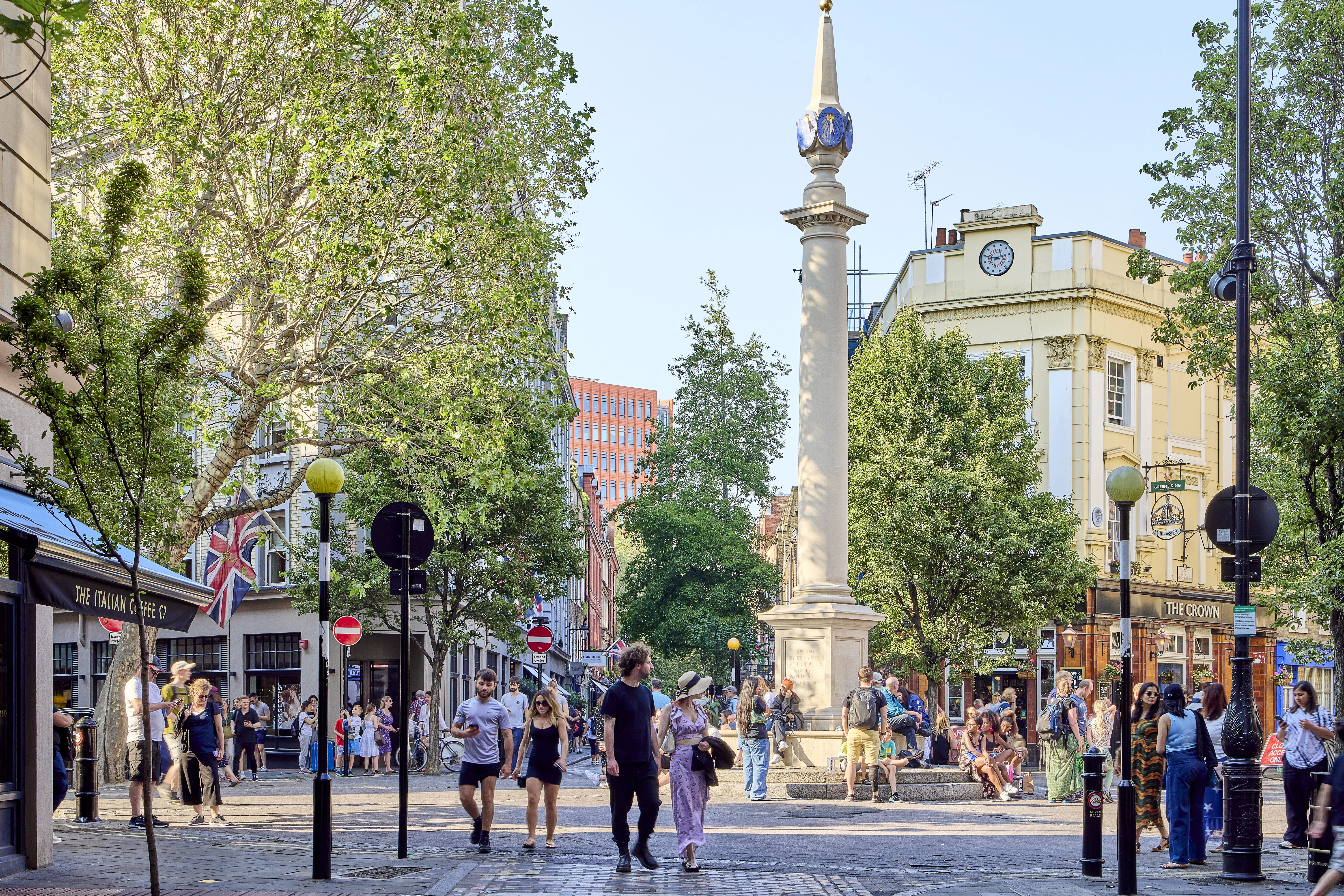
Tucked away in the heart of London's West End, Seven Dials is known for it's winding streets and colourful history as a neighbourhood that has reinvented itself time and time again. From it's origins as a fashionable address to years as a hotspot for traders and artists, discover a glimpse into Seven Dials' past.
Monmouth Street
Monmouth Street is a vibrant and historically rich destination in the heart of Covent Garden, seamlessly blending centuries of heritage with contemporary style. Named after the Earls of Monmouth, the street dates back to the 17th century and was once renowned for its second-hand clothing shops, famously referenced in John Gay’s 1716 poem Trivia, which captured the spirit of London’s bustling streets. Although the original Monmouth Street was lost during the urban redevelopment of the 19th century, its legacy was revived in the 1930s when Great and Little St Andrew’s Streets were renamed, restoring the historic name and its cultural significance.
Image credit: Trustee Paul Draper’s drawing is based on William Hodge’s painting. Taken from 'Seven Dials in Covent Garden: Looking after a Historic Neighbourhood'
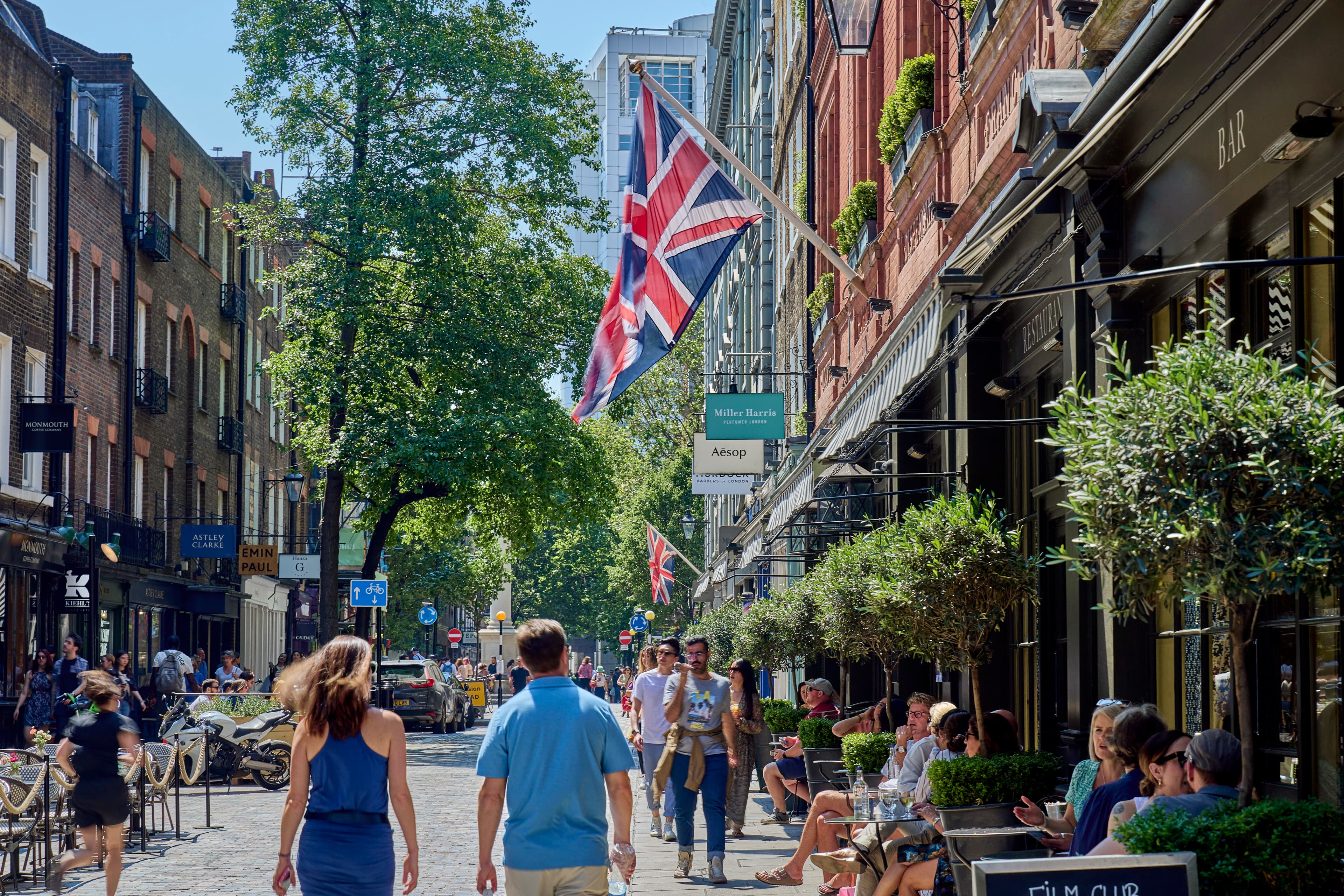
Today, Monmouth Street is a lively and stylish thoroughfare that reflects Covent Garden’s unique blend of tradition and innovation. A notable landmark is the blue plaque at No. 13, commemorating Brian Epstein, the legendary manager of The Beatles, whose influence on British music and culture remains profound. This tribute adds a layer of modern cultural heritage to the street’s already rich historical tapestry.
Neal's Yard
Tucked away in the heart of Seven Dials, Neal’s Yard is one of London’s most colourful and characterful hidden gems, rich in history and brimming with independent spirit. Named after Thomas Neale, the 17th-century developer behind the Seven Dials layout, Neal’s Yard began as a modest courtyard surrounded by warehouses and back entrances. By the mid-20th century, the area had fallen into disrepair—until a transformative revival in the 1970s, led by social entrepreneur Nicholas Saunders. Saunders saw potential in the derelict buildings and began converting them into spaces for ethical and sustainable businesses, laying the foundation for what Neal’s Yard represents today.
Image credit: Neal's Yard in 1981 by Mark Edwards
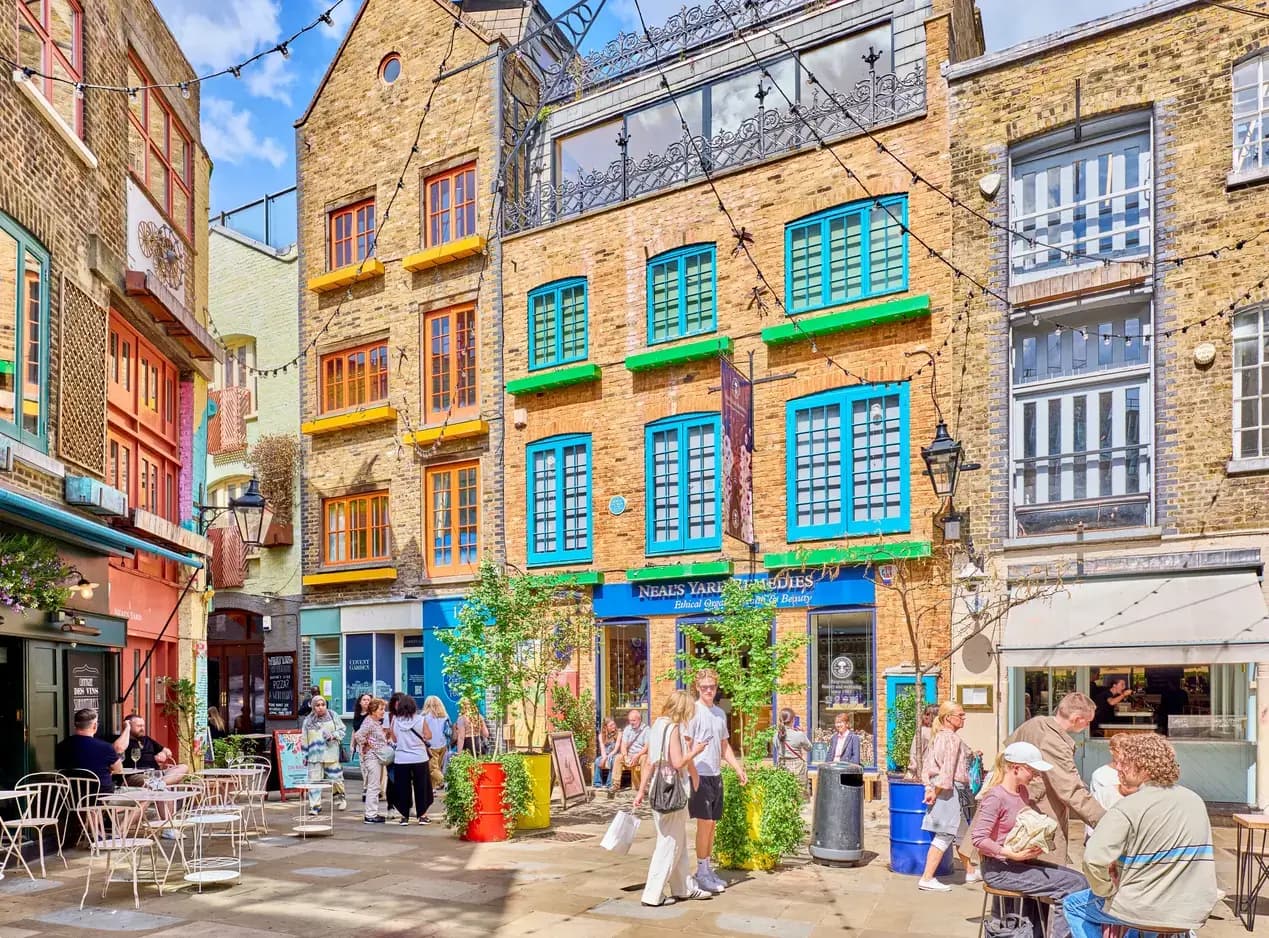
Among the pioneering ventures were Neal’s Yard Remedies, a trailblazer in natural health and beauty, and Monmouth Coffee, now a beloved institution known for its artisanal approach to coffee. These businesses helped establish Neal’s Yard as a hub for wellness, sustainability, and community-focused retail. The courtyard also celebrates its cultural legacy with a plaque commemorating Monty Python, the iconic British comedy group, adding a touch of humour and nostalgia to its vibrant atmosphere.
Today, Neal’s Yard is a must-visit destination for locals and tourists alike. Nestled between Monmouth Street and Shorts Garden, it offers a peaceful escape from the bustle of Covent Garden, with its brightly painted buildings, lush greenery, and bohemian charm. The courtyard is home to a curated mix of independent restaurants, cafés, shops, and wellbeing brands, each contributing to its unique character. Whether you're sipping organic juice, browsing handmade goods, or enjoying a plant-based meal, Neal’s Yard invites you to slow down and savour the moment.
Often described as one of Covent Garden’s most Instagrammable spots, Neal’s Yard is more than just a pretty place—it’s a symbol of urban regeneration, ethical entrepreneurship, and creative community spirit. Its story is one of transformation, proving that even the quietest corners of the city can become icons of innovation and charm.
Book your theatre tickets
Find the best seats in the house for less when booking award-winning musicals and plays with our official ticket partner, London Theatre Direct. Explore offers on the hottest shows from £20.